in Ermensee, he dedicated his entire life to art.
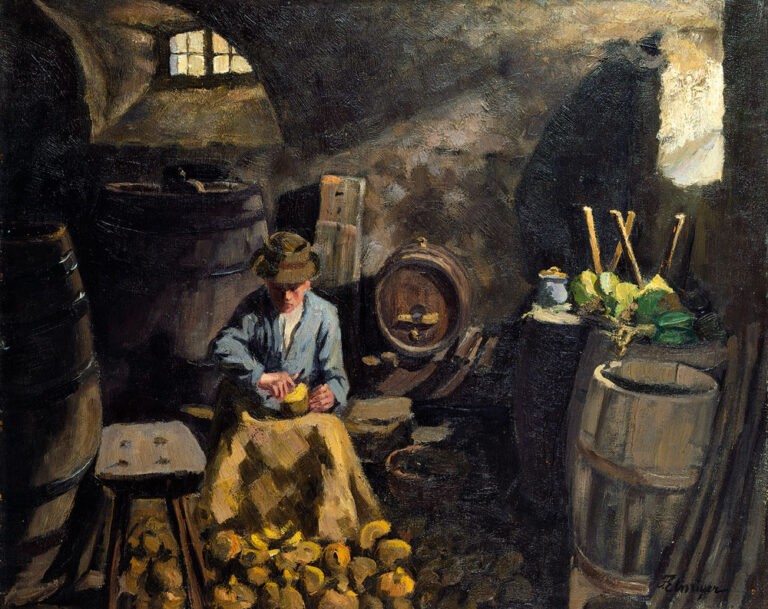
Franz Elmiger (1882-1934) grew up in a farmer’s family in Ermensee. The painter never gave up this self-evident identity of his rural origins. Not as a student in Lucerne, not with Hans Bachmann in Zurich and certainly not in Munich, where he attended the academy of art.
The Seetal, the rural village, the family home, which also housed his studio, were his workplace and at the same time remained his constant human and artistic point of reference.
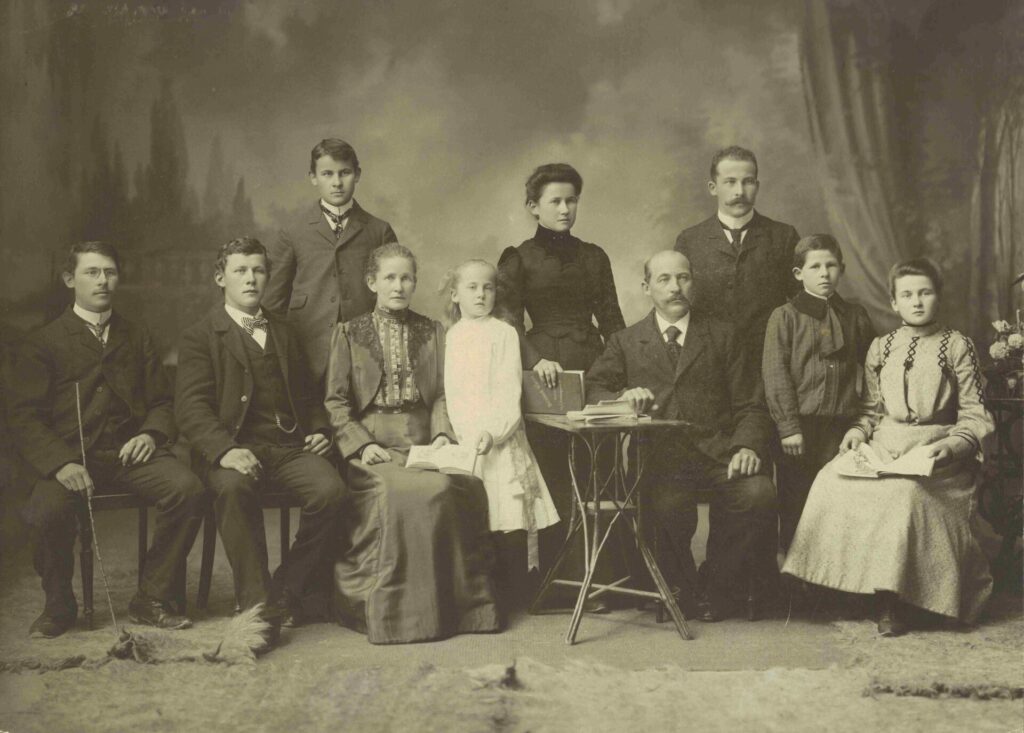
Family Photo: The Elmiger “Richters” Family, Ermensee.
Seated to the left of the small table, mother Anna Elmiger-Winiger with her youngest daughter Anna, later a milliner. To the right, father Josef Elmiger-Winiger, farmer and district court president.
From left to right: Artist Franz Elmiger; Anton, farmer; Albert, teacher; Marie, seamstress; Josef, engineer; Max, later a merchant; Josefa, known as “Finy,” who managed the household.
in Ermensee, he dedicated his entire life to art.
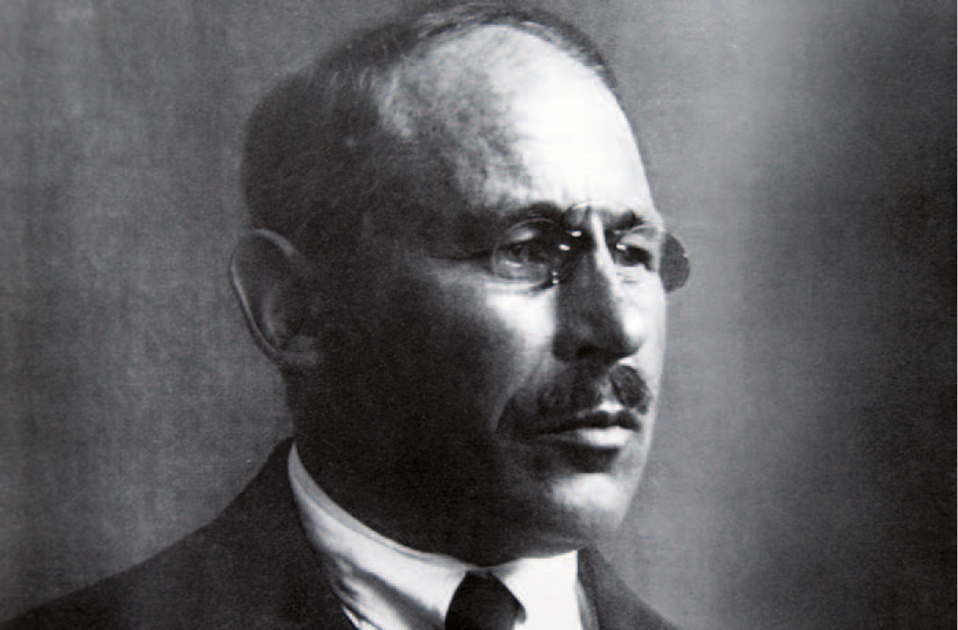
Teachers' seminar in Hitzkirch.
Schools of applied arts in Lucerne and Zurich.
Munich, Royal Bavarian Academy (professors: Heinrich von Zügel, Angelo Jank).
Art scholarships from the Swiss Confederation.
Member of the jury for the rotating exhibition of the Swiss Art Association.
Represented at all regular exhibitions of the Swiss Art Association.
Represented at all eight National Art Exhibitions.
Group exhibitions in Munich, Brussels, Zurich, Basel, Lucerne.
Restoration work in the Adligenswil Chapel, the Jesuit Church and on paintings belonging to the Kunstgesellschaft.
on September 27, died in Lucerne.
Elmiger’s regular participation in the so-called rotating exhibitions of Swiss artists – he was also a member of the jury at times – resulted in a wide range of contacts with other artists. He knew Hodler, Valloton, Max Buri and Cuno Amiet – to name just the most important. The artist, who was himself reserved, left no oral or written record of these relationships.
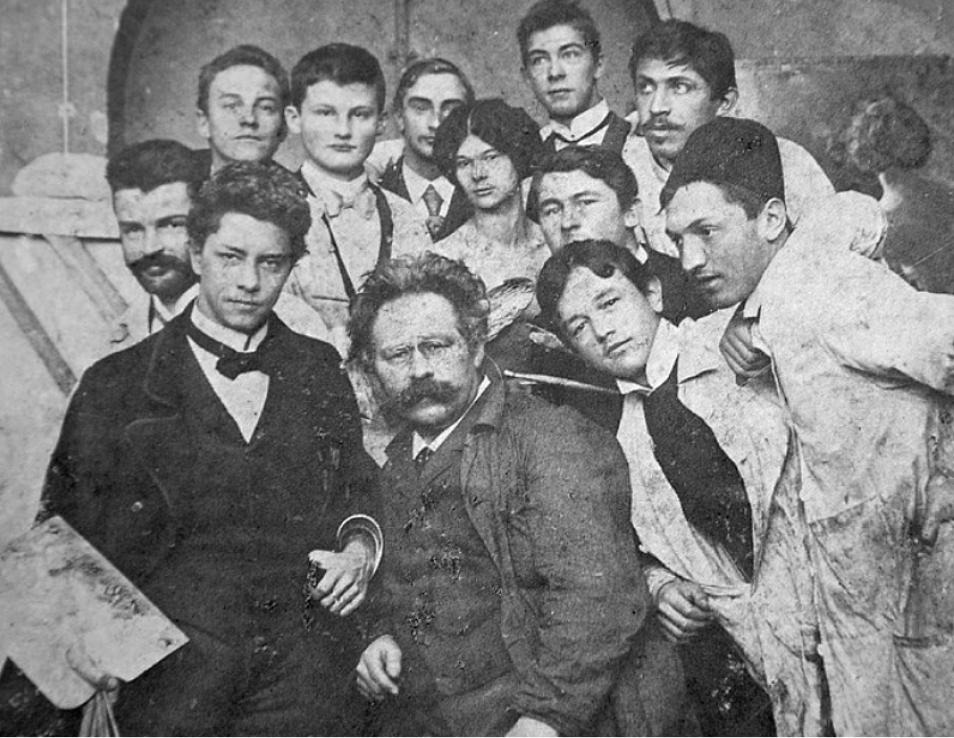
The class of Professor Hans Bachmann (front) probably photographed in 1902/03, during figure painting at the Zurich School of Arts and Crafts. To the right of the model, Ernst A. Escher, Raffaella de Grada further to the right.
To the left of the model, in the center, Frank Behrens, to the far left, with beard, Otto Lüssi. We gratefully received this information from Rudolf Mülli, Zurich painter, on February 14, 1958.
The following paintings by Franz Elmiger were displayed:
Other exhibitors included: Cuno Amiet, Hans Bachmann, Ernst Breitenstein, Hans Emmenegger, Ernst Hodel, Ferdinand Hodler, T.C. Kaufmann, J. Muheim, and many more.
Link: Swiss Art Association: The "Periodic" Exhibitions 1842-1961
The following paintings by Franz Elmiger were displayed:
Other exhibitors included: Hans Bachmann, P. Behrens Biel, Jean Danner, Raffaele de Grada, J.C. Kaufmann, Emil Hodel, Jost Muheim, Eduard Renggli, Rudolf Spreng
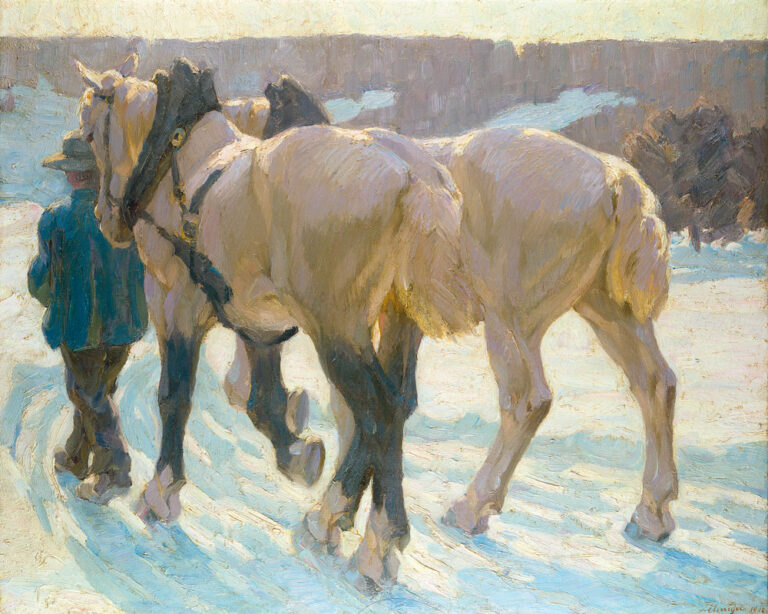
152 paintings and oil studies from public and private collections and from the artist's estate.
Excerpt:
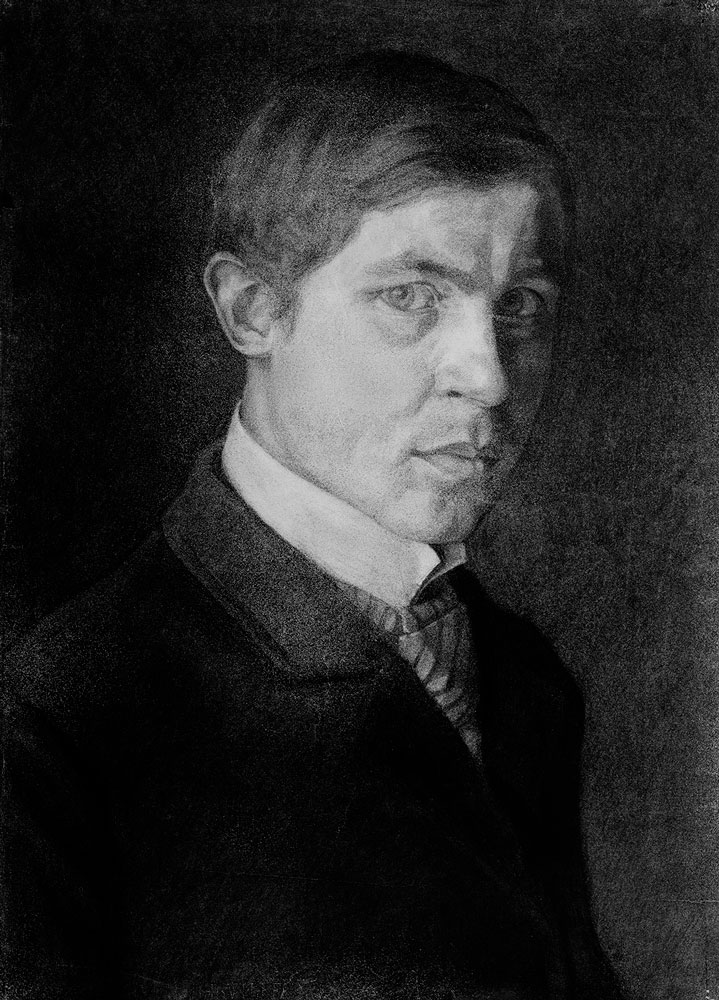
A total of 43 paintings from private collections were displayed:
Excerpt:
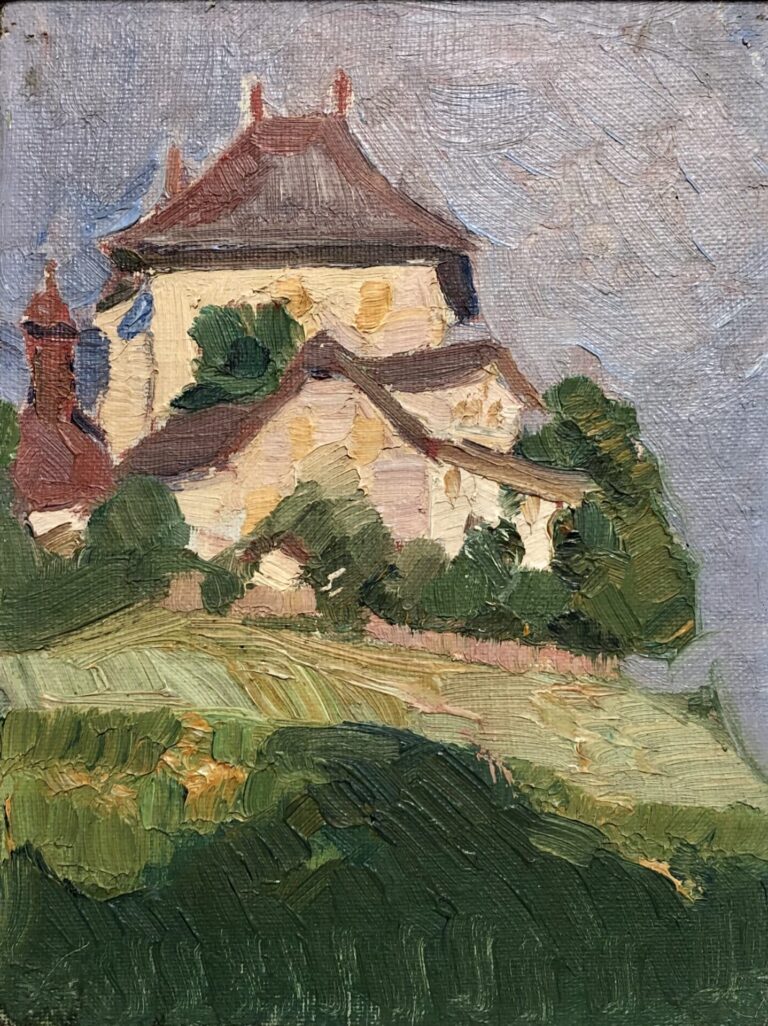
A total of 56 paintings from private collections were exhibited:
Excerpt:
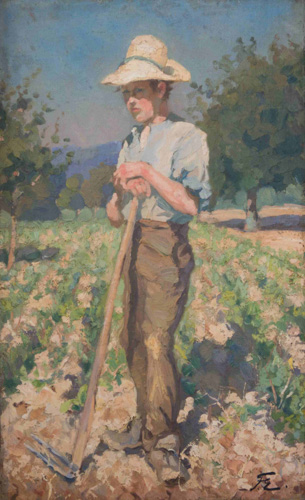
A total of 68 drawings and paintings from museums and private collections were displayed.
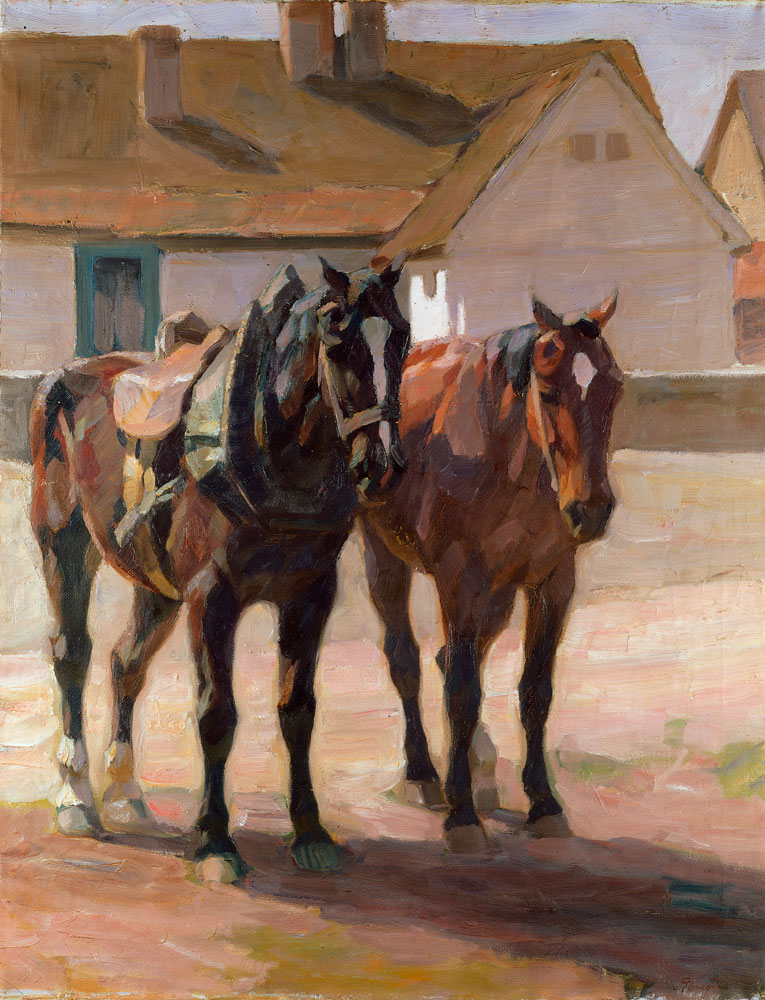
A total of 107 drawings and paintings from private collections, museums, and public ownership were displayed.
Excerpt:
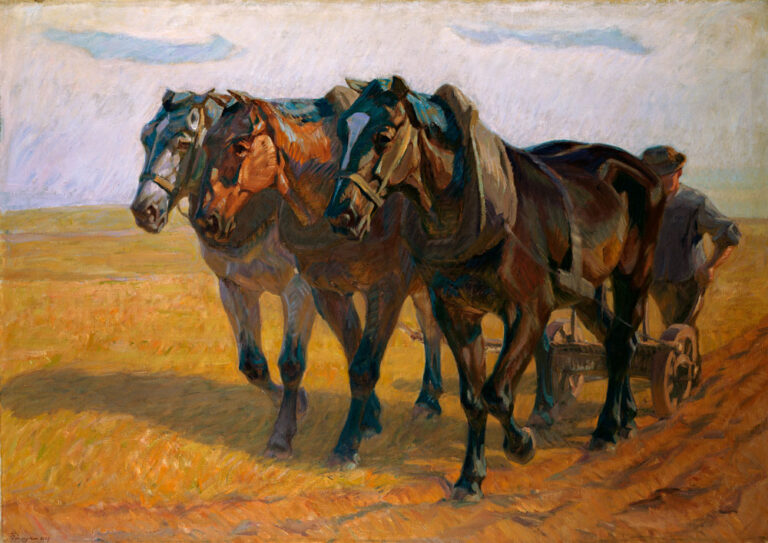
Throughout the entire castle, 120 portraits of children from Central Switzerland spanning four centuries were exhibited.
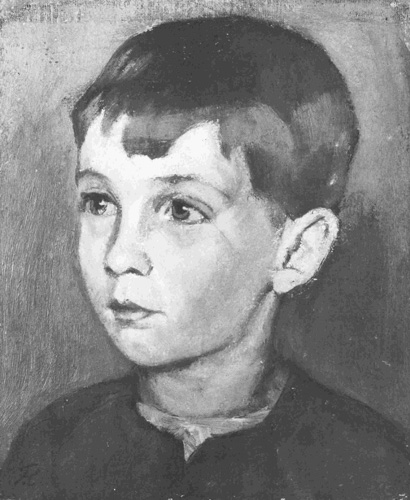
The Kunstmuseum Luzern displayed numerous works depicting our animal relatives. The exhibition focused on the often intimate but not always simple relationship between humans and animals.
Picture: Sandfuhr on the Old Rhine, 1916
curated by Heinz Stahlhut
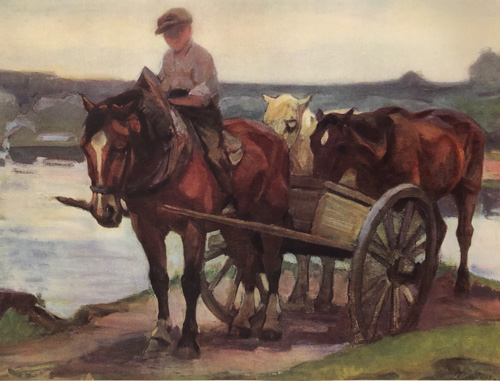
Elmiger gilt als Tiermaler. Man hat diese Seite seines Schaffens schon zu Lebzeiten intensiver wahrgenommen, als die frühen Genrebilder und die späteren zahlreichen und bedeutenden Landschaften. Das mag mit der spezifischen Umgebung zusammenhängen, in der Elmiger gearbeitet hat, dem damalige Bauerndorf Ermensee und Luzern als Landwirtschaftskanton.
Franz Elmiger arbeitete während der Münchner Jahre hauptsächlich bei Heinrich von Zügel (22.10.1850 – 30.01.1941), einem Spezialisten für teils opulente Darstellungen heimischer Tiere. Zügel studierte mit seinen Studenten in einem eigens dafür eingerichteten Atelier nach dem lebenden Modell Rinder und Pferde. Viele Bilder, die vermutlich um 1908 entstanden sind, verdeutlichen die Zügelsche Schulung.
In den späteren Bildern Elmigers gewinnt die Umgebung, die Landschaft in seinen Tierbildern an Gewicht. Auch zeigen sich deutliche Abstraktionstendenzen, welche zu einer immer flächiger wirkenden Bildanlage führt.